

Our Products
- Home
- Products
The 100-Series
The 100-series uses rPET derived from recycled plastic used to make plastic bottles to manufacture polyester resins. The recycling process allows us to replace certain additives and raw materials to manufacture a good quality resin and contribute to the circular economy. Our 100-Series not only lowers the carbon emissions of raw manufacturing, but also helps combat the plastic pollution that is plaguing our environment and oceans.

The 102 PA
This product uses rPET waste destined for landfill sites and helps us eliminate plastic pollution that could enter our rivers, eventually landing up in the ocean. It offers the same performance as a conventional GP resin, with uncompromised quality. The new NCS Resins range of rPET (polyethylene terephthalate) products is based on innovative hybrid green technology and designed to offer better value. NCS 102 PA is a rPET-based resin and this eco-friendly technology contributes to sustainable development to conserve our environment.
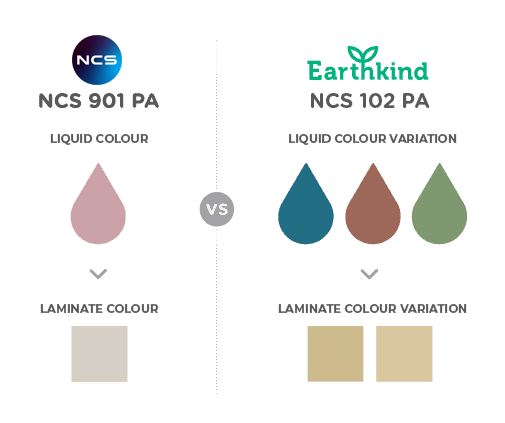
There is a colour variation due to the availability and stock of PET bottles for recycling. This does not, however, affect the quality in any way.
DESCRIPTION
NCS 102 PA makes use of coloured rPET waste (e.g. green, brown and blue cold drink and water bottles) as a raw material ingredient. The terephthalic acid ingredients used to manufacture the rPET bottles offers excellent product performance for this general purpose resin.
Choosing to use NCS 102 PA reduces CO2 emissions by 279 kgCO2e/ton of product used in comparison to conventional general-purpose resins such as NCS 901PA.
CO2 FOOTPRINT REDUCTION
COMPARISON | UNIT | STANDARD – NCS 901 PA | EARTHKIND – NCS 102 PA |
|---|---|---|---|
CO2 Footprint per Product | kgCO2e/ton | 3058 | 2779 |
CO2 Footprint Reduction | kgCO2e/ton | 0 | -279 |
Percentage Reduction | % | 0 | -9% |
The CO2 equivalent and saving % is an in-house calculation using conventional scope techniques. NCS is engaging with a 3rd party to verify this.
- The control principle was followed with a gate-to-gate accounting for 2020.
- Only CO2 emissions from raw materials and energy input (electricity and gas) associated with the manufacturing process for each product were considered.
- Default emission factors for the raw materials and gaseous fuel were obtained from a credible database and source.
- Eskom’s grid emission factor was obtained from their 2020 Integrated Report.
- These figures are accurate at the date of publishing.
LIQUID & LAMINATE COLOUR VARIATION
APPLICATION
NCS 102 PA is a rigid, medium reactivity, thixotropic, unsaturated polyester resin. It is pre-accelerated with a good cure rate.
NCS 102 PA is designed for hand lay-up and spray applications. This resin is ideal for use in automotive components and general industrial mouldings. NCS 102 PA is Lloyds approved. Each user must determine the suitability of this product for their particular mode of operation and intended end use application.
FEATURES | BENEFITS |
|---|---|
Low viscosity | Excellent glassfibre wet-out |
Thixotropic | Minimal drainage |
Non-air-inhibited | Cures to a tack-free finish |
Specially promoted | Predictable geltime and cure rate |
High Heat Distortion Temperature | Good heat resistance |
Lloyds approved | Meets international quality standards |
Hybrid Green Technology | Reduced PET waste & lower
CO2 emissions |
TYPICAL LIQUID PROPERTIES
PROPERTY | SPECIFICATION | NCS TEST METHOD |
|---|---|---|
Relative density, ratio | 1,10 – 1,12 | 14 |
Viscosity @ 25°C, mPa.s | 400 – 600 | 5.3 |
Acid value, mg KOH/g | 27 | 13 |
Volatile content, % | 43 – 46 | 7A |
Geltime @ 25°C, 2 phr* BUTANOX M50, minutes | 15 – 25 | 8 |
Liquid appearance | Dark, Opaque | 2 |
Stability in the dark @ 25°C, months | 6 minimum | 4.1 |
*phr = parts per hundred resin, by mass |

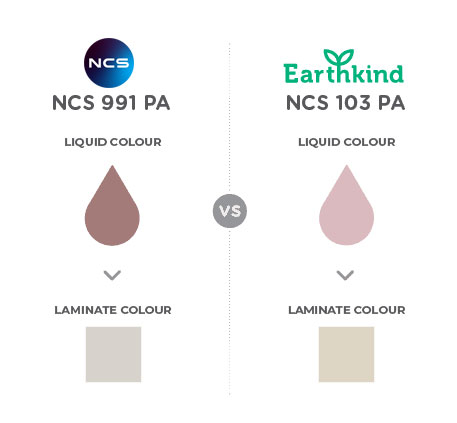
NCS 103 PA is the premium Lloyds approved rPET resin which offers the same performance as conventional Isophthalic resins with uncompromised quality. There is no colour variation as with NCS 102 PA since only clear rPET is used.
By substituting virgin material we are not only addressing a worldwide issue, but also offering a more affordable product. Better for the planet, and your pocket.
DESCRIPTION
The new NCS Resins range of rPET (polyethylene terephthalate) products is based on INNOVATIVE hybrid green technology and designed to offer better VALUE.
NCS 103 PA is a rPET-based resin and this eco-friendly technology contributes to sustainable development to conserve our environment.
Choosing to use NCS 103 PA reduces CO2 emissions by 376 kgCO2e/ton of product used in comparison to conventional high performance resins such as NCS 991PA.
CO2 FOOTPRINT REDUCTION
COMPARISON | UNIT | STANDARD – NCS 991 PA MV | EARTHKIND – NCS 103 PA |
|---|---|---|---|
CO2 Footprint per Product | kgCO2e/ton | 3155 | 2779 |
CO2 Footprint Reduction | kgCO2e/ton | 0 | -376 |
Percentage Reduction | % | 0 | -12% |
The CO2 equivalent and saving % is an in-house calculation using conventional scope techniques. NCS is engaging with a 3rd party to verify this.
- The control principle was followed with a gate-to-gate accounting for 2020.
- Only CO2 emissions from raw materials and energy input (electricity and gas) associated with the manufacturing process for each product were considered.
- Default emission factors for the raw materials and gaseous fuel were obtained from a credible database and source.
- Eskom’s grid emission factor was obtained from their 2020 Integrated Report.
- These figures are accurate at the date of publishing.
LIQUID & LAMINATE COLOUR VARIATION
APPLICATION
NCS 103 PA is a rigid, medium reactivity, thixotropic, unsaturated polyester resin. It is pre-accelerated with a good cure rate and is our premium rPET resin with good liquid colour consistency.
NCS 103 PA is designed for hand lay-up as well as spray applications. This resin is ideal for use in automotive components, general industrial mouldings and marine applications. NCS 103 PA is Lloyds approved. Each user must determine the suitability of this product for their particular mode of operation and intended end use application.
FEATURES | BENEFITS |
|---|---|
Low viscosity | Excellent glassfibre wet-out |
Thixotropic | Minimal drainage |
Non-air-inhibited | Cures to a tack-free finish |
Specially promoted | Predictable geltime and cure rate |
High Heat Distortion Temperature | Good heat resistance |
Lloyds Approved | Meets international quality standards |
Hybrid Green Technology | Reduced PET waste & lower
CO2 emissions |
TYPICAL LIQUID PROPERTIES
PROPERTY | SPECIFICATION | NCS TEST METHOD |
|---|---|---|
Relative density, ratio | 1,10 – 1,12 | 14 |
Viscosity @ 25°C, mPa.s | 400 – 600 | 5.3 |
Acid value, mg KOH/g | 27 | 13 |
Volatile content, % | 43 – 46 | 7A |
Geltime @ 25°C, 1 phr* BUTANOX M50, minutes | 40 – 50 | 8 |
Liquid appearance | Opaque, faint pink | 2 |
Stability in the dark @ 25°C, months | 6 minimum | 4.1 |
*phr = parts per hundred resin, by mass |